Zigbee vs Matter: What’s the Difference and Which Should You Choose?
Smart homes are meant to make life easier, but getting one set up can feel surprisingly complicated.
Lights that switch on when you walk into a room. Heating that adjusts automatically. Sensors that quietly keep an eye on doors, windows, movement and energy use.
It all sounds simple, until you start asking the practical questions.
- Does this device work with that app?
- Do I need a hub?
- What is Zigbee?
- What is Matter?
And why does every smart home product seem to have its own little logo on the box?
If you have ever stood in front of a smart plug, sensor, switch or gateway and wondered what language it speaks, this guide is for you.
The simple answer is this:
Zigbee is a wireless technology that smart devices use to talk to each other. Matter is a newer smart home protocol designed to help devices from different brands work together.
They are connected, but they are not quite the same thing.
Think of it like this: Zigbee is one way for devices to communicate. Matter is more like a shared rulebook that helps different smart home systems understand each other.
Let’s break it down.
Zigbee vs Matter in one sentence
Zigbee is great for low-power smart devices such as sensors, switches and lighting controls, while Matter is designed to make smart home products easier to set up and use across major platforms such as Apple Home, Amazon Alexa, Google Home and Samsung SmartThings.
But the best choice depends on what you are installing, how many devices you need, which platforms your customer uses and how future-ready the system needs to be.
First, what is Zigbee?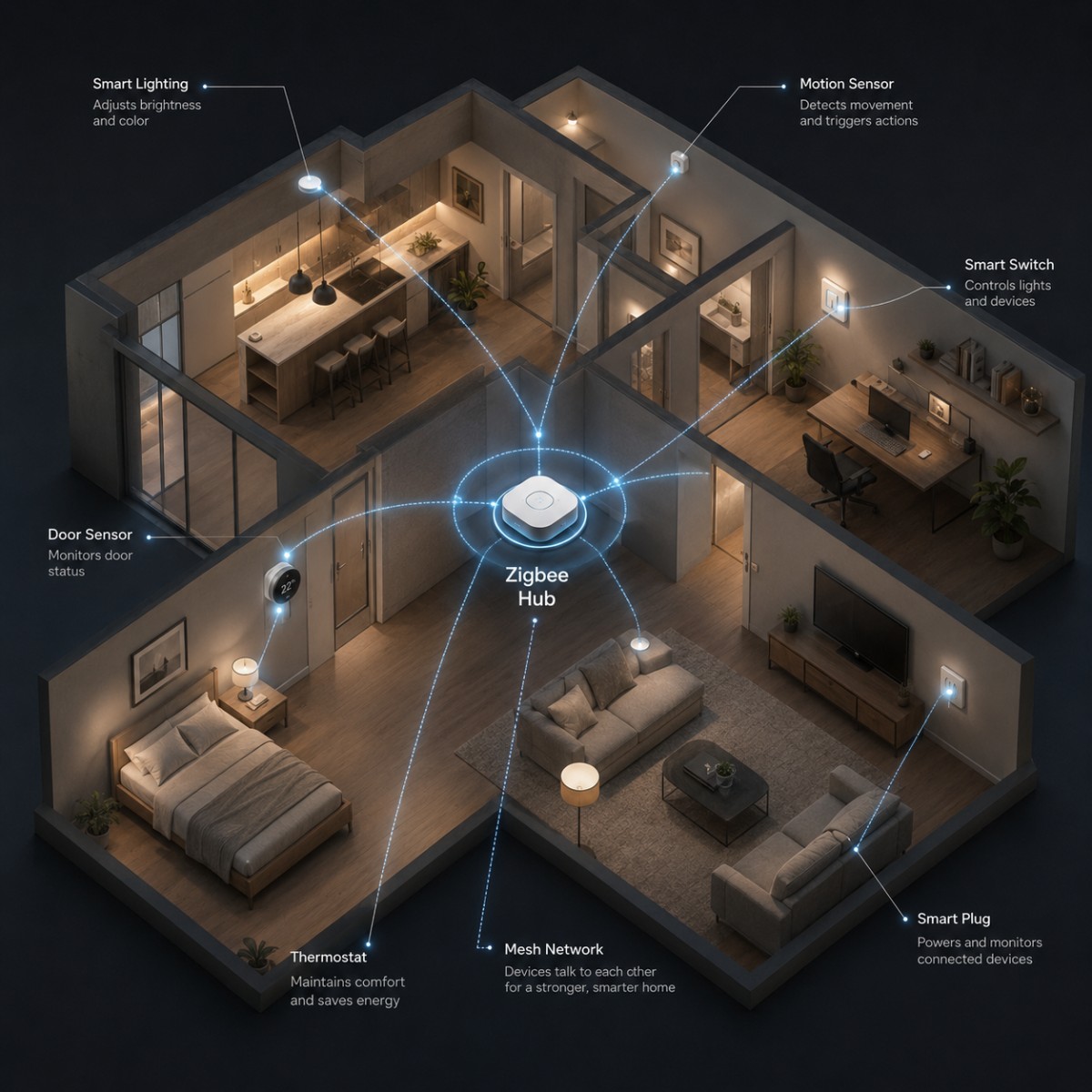
Zigbee is a wireless communication protocol used by many smart home and building automation devices.
It is designed for small, low-power devices that need to send quick messages. For example:
- A motion sensor telling a light to turn on
- A door contact telling a system that a door has opened
- A smart switch triggering a scene
- A temperature sensor sending regular updates
- A smart plug reporting energy use
Zigbee is not built for heavy data, such as video streaming. It is built for short, reliable messages.
Its big strength is that it can create a mesh network. That means Zigbee devices can pass messages between each other, rather than every device having to connect directly back to one central router.
Imagine a group of people passing a note across a room. The note does not need to reach the final person in one giant throw. It can be passed from person to person until it gets there.
That is the basic idea behind a Zigbee mesh.
This makes Zigbee especially useful in homes, apartments, offices, hotels, assisted living spaces and commercial environments where lots of small smart devices need to communicate without adding lots of extra cabling.
What is Matter?
Matter is a smart home connectivity protocol created to solve one of the biggest problems in smart
technology: compatibility.
For years, connected devices have often worked beautifully inside their own little world, but less beautifully when asked to work with something else.
- A smart light might work with Alexa but not Apple Home.
- A lock might need its own hub.
- A sensor might connect to one app but not another.
- A customer might buy a product, get home, and discover it does not work with their chosen system.
Matter aims to reduce that confusion.
A Matter-certified device is designed to work across Matter-compatible ecosystems, helping users mix and match products from different brands easily.
In plain English, Matter is trying to make smart home technology feel less like a guessing game.
Are Zigbee and Matter competitors?
Not exactly.
This is where the confusion often starts.
Zigbee and Matter are sometimes spoken about as though they are direct rivals, but they actually do different jobs.
Zigbee is a wireless protocol.
It is one of the ways smart devices can communicate.
Matter is a connectivity protocol.
It is designed to help smart devices work across different platforms and ecosystems.
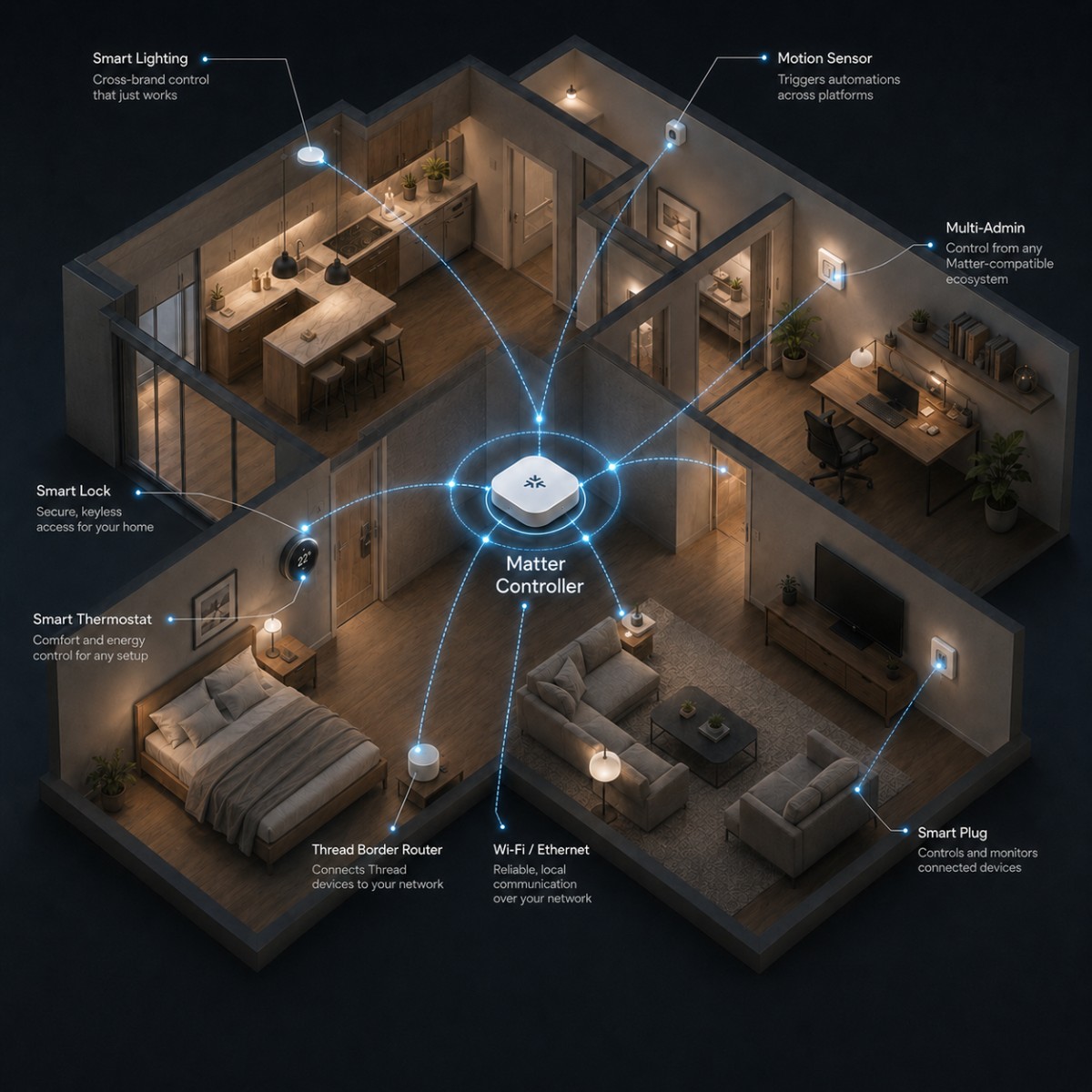
Matter can run over technologies such as Wi-Fi, Ethernet and Thread. Zigbee devices can also be brought into Matter systems through compatible bridges or hubs.
So it is not always a case of Zigbee or Matter. In many real installations, the answer may be Zigbee and Matter.
A Zigbee lighting system, for example, could continue to use Zigbee devices while a compatible bridge helps expose those devices to a Matter-enabled smart home platform.
That is useful because it means existing Zigbee technology does not suddenly become irrelevant. Instead, it can form part of a wider, more connected smart home setup.
When should you choose Zigbee?
Zigbee is a strong choice when the system needs lots of small devices to communicate reliably without using too much power.
One of Zigbee’s biggest advantages is battery life. Because it is designed for low-power communication, it is well suited to sensors and switches that may need to operate for long periods without constant charging or mains power.
It is also useful where a mesh network can help improve coverage. In larger homes or buildings, devices can help pass messages around the network, creating a more flexible system.
For installers and integrators, Zigbee can be a practical option because it supports smart control without major rewiring. That can make it especially appealing for retrofit projects, upgrades and occupied buildings where running new cables would be disruptive.
When should you choose Matter?
Matter is a strong choice when ease of use and compatibility are the priority.
It is designed to make smart home devices easier to buy, set up and control across different platforms. That matters because customers do not always think in technical standards.
Matter helps answer those questions more confidently.
For customers, the Matter logo can act as a useful signpost. It suggests that a product has been designed to work with Matter-compatible platforms, reducing the risk of buying something that only works in one ecosystem.
For installers, Matter can make handover simpler. If a customer uses Apple today but Google tomorrow, or has different platforms in different rooms, Matter is designed to make that less of a headache.
What about Thread?
You will often hear Matter and Thread mentioned together, which can add another layer of confusion.
Thread is a low-power wireless mesh networking technology. Matter can use Thread to communicate with certain smart home devices.
A simple way to understand it:
Matter is the standard. Thread is one of the network technologies Matter can use.
Matter can also work over Wi-Fi and Ethernet, depending on the device.
Thread is often used for smaller, low-power devices, which is why it is frequently compared with Zigbee. Both can support mesh-style communication for smart home products. The difference is that Thread is IP-based and closely linked with the Matter ecosystem, while Zigbee is an established smart device protocol with a huge existing base of products.
For the end user, the important detail is this: a Matter-over-Thread device will usually need a Thread border router. This might be built into another product, such as a compatible smart speaker, hub or router.
Is Matter replacing Zigbee?
Not overnight.
Zigbee has been used in smart homes and connected buildings for many years, and there are large numbers of Zigbee devices already installed. It remains a strong option for low-power smart control, especially where proven mesh networking and device availability are important.
Matter is growing quickly, but it is still evolving. Device support continues to expand, and the experience is becoming better as manufacturers, platforms and products mature.
The better way to look at it is this:
Zigbee is a proven technology for smart device communication. Matter is a newer standard helping smart homes become more compatible and easier to use.
They can exist together.
In fact, that is one of the most practical routes for many customers. A system may use Zigbee devices for lighting, sensors and automation, while a bridge or controller helps connect those devices into a wider Matter-compatible smart home environment.
Which is better: Zigbee or Matter?
There is no single winner because they solve different problems.
If the question is, “What is better for low-power sensors and switches?” Zigbee is often a very strong choice.
If the question is, “What is better for making different brands and platforms work together?” Matter is the more relevant answer.
If the question is, “What should I choose for a customer who wants a smart home that is simple to expand in future?” the best answer may be a carefully designed system that considers both.
The key is not to chase the newest logo. It is to choose the right technology for the job.
Sometimes Zigbee helps deliver that. Sometimes Matter does. Often, both have a role to play.
A simple buying guide for customers
If you are choosing smart home products, start with these questions:
1. What do I want the device to do?
For sensors, switches, lighting controls and simple automation, Zigbee can be excellent.
For products that need to work across major smart home apps and platforms, Matter is worth looking for.
2. Do I already have a hub or controller?
Zigbee devices often need a Zigbee hub or gateway. Matter devices need a Matter controller, and Matter-over-Thread devices need a Thread border router.
Before buying, check what is already in the property.
3. Which app or ecosystem do I use?
If the customer uses Apple Home, Amazon Alexa, Google Home or Samsung SmartThings, Matter can help provide more flexibility across those platforms.
4. Am I expanding an existing system?
If there is already a reliable Zigbee system in place, it may not need to be replaced. A suitable bridge or gateway may allow it to work as part of a wider setup.
5. Do I need professional advice?
For single devices, the choice may be straightforward. For larger homes, commercial buildings, assisted living environments, access control, security or multi-device automation, professional system design can save time, cost and frustration.
Zigbee vs Matter: the final answer
Zigbee and Matter are both important, but they are not doing the same job.
Zigbee helps smart devices communicate efficiently, especially low-power devices such as sensors, switches and lighting controls.
Matter helps smart home products work together more easily across different brands and platforms.
Zigbee is about how devices talk.
Matter is about helping different smart home ecosystems understand each other.
For customers, Matter can make buying and setup simpler.
For installers, Zigbee remains a practical and proven option for smart control.
For modern smart homes and buildings, the best approach may be using the strengths of both.
The future of smart technology is not just about adding more devices. It is about making those devices work together in a way that feels simple, reliable and useful.
That is where Zigbee and Matter both have a part to play.
Find out more
New to these technologies? Start with our simple guides:
What is Zigbee? A simple guide to the wireless protocol powering smarter spaces
What is Matter? The smart home standard making connected devices simpler
For help specifying smart home, access control or connected building solutions, speak to the CIE team.
Find out more
- What is Zigbee? A simple guide to the wireless protocol powering smarter spaces
- Akuvox MR01: Smarter, contactless care monitoring for safer living spaces
- What Is Matter? The smart home standard making connected devices simpler
- The Integration Exchange Podcast Launch
- Aliro 1.0 Arrives: New standard for digital keys and smart security
|
 Let the CIE system design team help with your next access control project