What is Zigbee? A simple guide to the wireless protocol powering smarter spaces
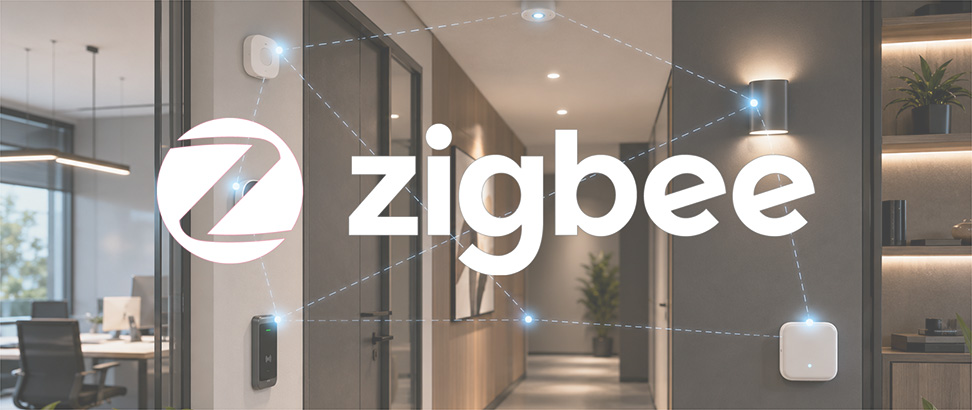
Zigbee is one of those smart technology terms you may have heard before, but never had fully explained.
The good news? It’s actually very simple.
Zigbee is a wireless communication protocol that allows smart devices to talk to each other. Think sensors, switches, lighting controls, thermostats, smart locks and automation devices all quietly sharing information in the background.
In short, Zigbee helps buildings become smarter, more responsive and easier to control, without filling the space with extra cables.
So, what does Zigbee actually do?
Zigbee is designed for small, low-power devices that need to send quick pieces of information.
For example:
- A motion sensor tells a light to turn on.
- A door contact tells an access control system that a door has opened.
- A smart switch tells a group of devices to activate a scene.
- A temperature sensor sends updates to a building control system.
It is not designed for heavy-duty data, such as streaming video or large file transfers. That’s a job for Wi-Fi or a wired network.
Why is Zigbee different from Wi-Fi?
Wi-Fi is great for laptops, phones, tablets, video calls and streaming. But for small smart devices, Wi-Fi can be more power-hungry than needed.
Zigbee is different because it is built for low-power, low-data tasks. That means battery-powered devices can often run for long periods without needing constant charging or mains power.
It also uses something called a mesh network.
What is a Zigbee mesh network?
A mesh network means devices can pass messages between each other, rather than every device needing to speak directly to one central router.
Imagine a room full of people passing a note across the room. The note does not need to reach the final person in one jump. It can be passed from person to person until it gets there. Zigbee works in a similar way.
This can help create a more reliable wireless network, especially across larger homes, offices, hotels, residential buildings and commercial spaces.
What about Matter?
Matter is the next step in making smart devices easier to connect.
While Zigbee is a strong wireless protocol for low-power smart devices, Matter is designed to solve a bigger problem: compatibility.
In the past, different smart home and building products often needed their own apps, hubs or ecosystems. Matter creates a more universal language, helping devices from different brands work together easily. The key difference is that Zigbee is mainly a wireless mesh protocol, while Matter is smart home connectivity protocol that can run over technologies such as Wi-Fi, Ethernet and Thread.
This evolution is necessary because users and installers need simpler setup, better interoperability and systems that are easier to scale without being locked into one manufacturer.
For a deeper comparison, read our full guide: Zigbee vs Matter: what’s the difference?
Where is Zigbee used?
Zigbee is commonly used in smart home and building automation systems, including:
-
Smart lighting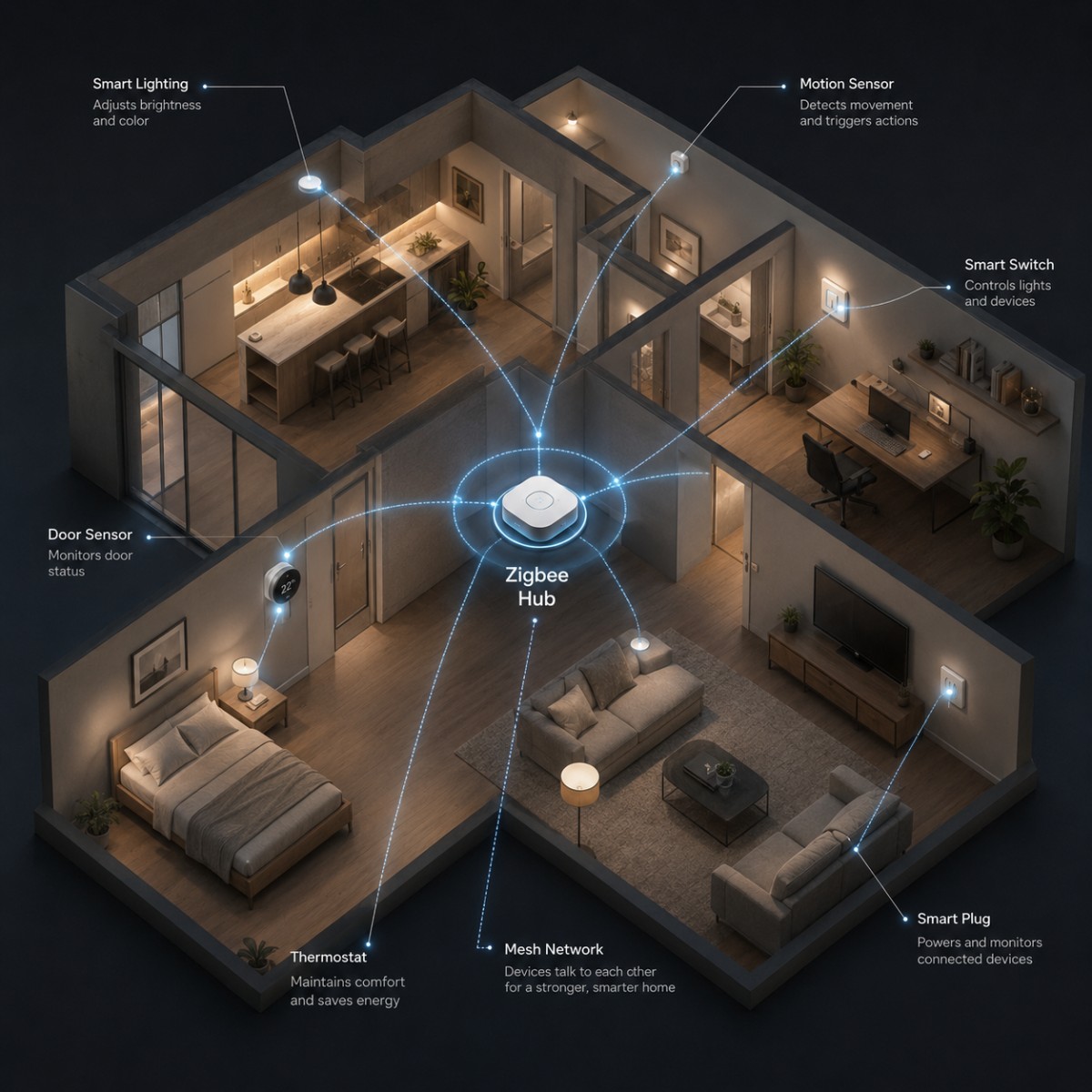
- Motion sensors
- Door and window sensors
- Smart switches
- Heating and cooling controls
- Energy monitoring
- Smart plugs
- Automated scenes and routines
- Residential automation systems
For installers and system integrators, Zigbee can be a practical way to add smart control without major rewiring.
For end users, it simply means devices can work together smoothly.
What are the main benefits of Zigbee?
Low power
Zigbee is ideal for battery-powered devices such as sensors, switches and controls.
Reliable networking
Its mesh network design allows devices to help carry messages across the system.
Scalable systems
Zigbee can support anything from a small smart home setup to a wider connected building system.
Less cabling
Wireless communication can reduce the need for disruptive installation work.
Smart automation
Zigbee makes it easier to create simple routines, such as lights turning on when motion is detected or devices responding automatically to user behaviour.
Does Zigbee need a hub?
In most systems, yes.
A Zigbee hub, gateway or controller acts as the main connection point between the Zigbee devices and the wider control system, app or network.
The Zigbee devices talk to the hub, and the hub helps manage communication with the rest of the system.
Is Zigbee secure?
Zigbee includes security features designed to protect communication between devices. As with any connected technology, good system design is important.
That means using trusted devices, keeping firmware updated where possible, setting up networks correctly and choosing products from reputable manufacturers.
The simple answer
Zigbee is a clever wireless protocol that helps smart devices communicate efficiently.
It is low-power, flexible and particularly useful for automation, lighting, sensors and smart building control.
For users, it helps make technology feel seamless.
For installers and integrators, it offers a practical way to build smarter systems with less cabling and more flexibility.
Find out more
- Zigbee vs Matter: What’s the Difference and Which Should You Choose?
- Akuvox MR01: Smarter, contactless care monitoring for safer living spaces
- What Is Matter? The smart home standard making connected devices simpler
- The Integration Exchange Podcast Launch
- Aliro 1.0 Arrives: New standard for digital keys and smart security
|
 Let the CIE system design team help with your next access control project