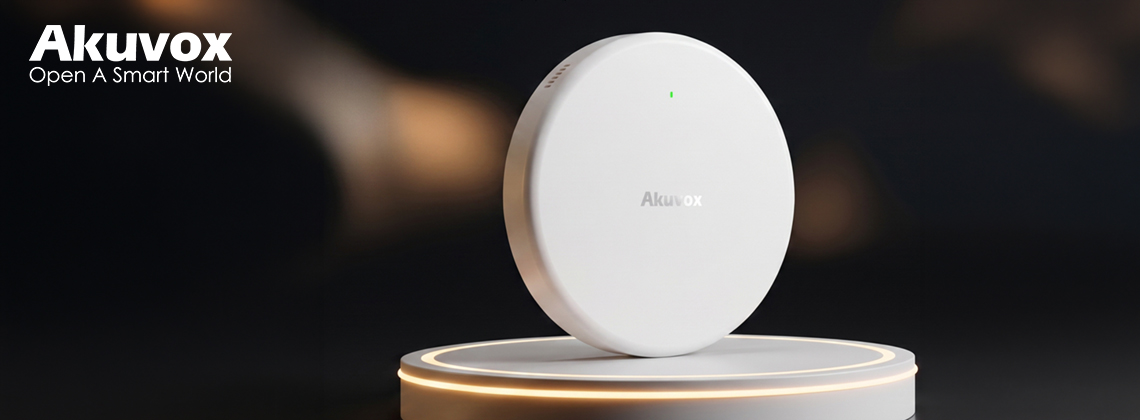
Akuvox MR01: Smarter, contactless care monitoring for safer living spaces
Falls and unattended bed exits remain two of the biggest safety concerns in elderly care. In many cases, the speed of response can make a significant difference, yet traditional monitoring methods often rely on cameras, wearable devices or regular manual checks each with its own limitations. The Akuvox MR01 offers a smarter, more discreet way forward.
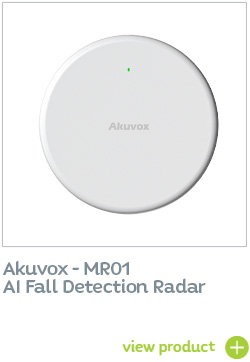
Designed as an AI-powered millimetre-wave radar sensor, the MR01 provides contactless monitoring for fall detection and bed-exit detection, speeding up response time when support may be needed. Crucially, it does this without using a camera and without requiring the resident to wear or remember a device.
Room-Wide Awareness Without Contact
One of the MR01’s standout advantages is its wide detection range. This allows a single device to efficiently cover nearly an entire room, helping reduce the number of devices required across a project. That means lower deployment complexity, reduced installation costs and a more streamlined monitoring solution, all while supporting timely caregiver follow-up when an incident occurs.
Built for Real Care Environments
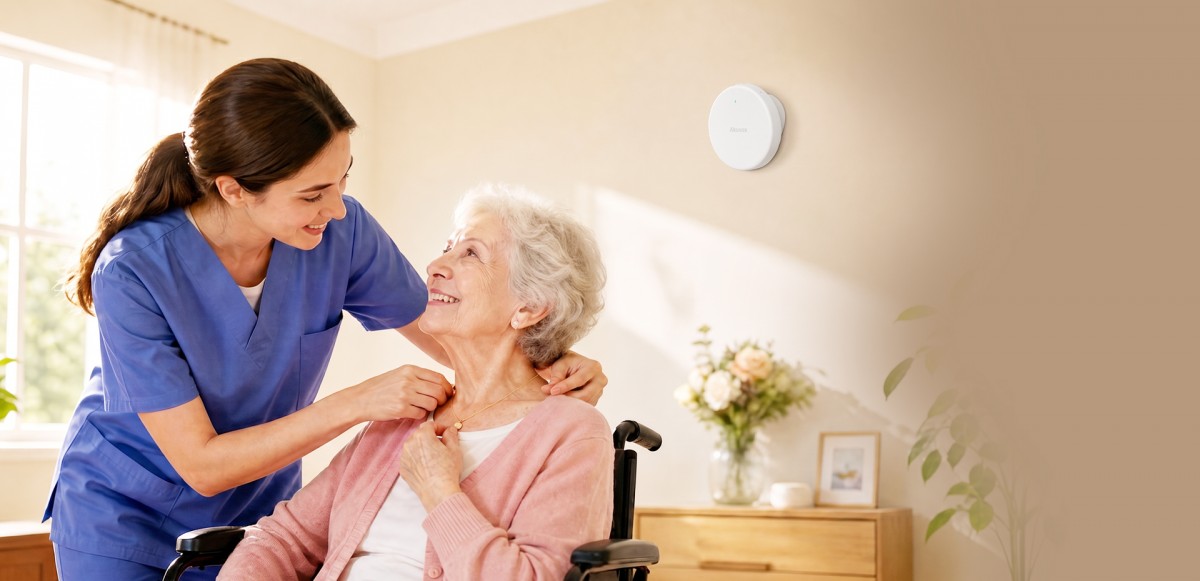
Care settings are rarely simple. Residents may move between beds, chairs, bathrooms and doorways. Caregivers may enter and leave rooms. Some environments may need to monitor more than one person or more than one bed area.
The MR01 is designed with this reality in mind. It supports both fall detection and bed-exit detection and can be configured with detection zones and sub-regions, allowing installers to define the active monitoring area according to the room layout. Bed-exit monitoring can also be configured with time thresholds, helping teams identify when someone has left the bed for longer than expected.
This makes the MR01 particularly valuable in elderly care facilities, healthcare institutions, supported living environments and safety-focused residential settings.
When a fall or bed-exit event is detected, the MR01 can report alarms through the wider Akuvox ecosystem, including indoor monitors, guard phones, SDMC, SmartPlus Cloud and supported third-party systems. For example, if an elderly resident falls in a bedroom, the MR01 can detect the event and trigger an alarm notification to a connected guard phone or management platform, supporting faster intervention and clearer alarm handling.
- For care teams - this can help reduce reliance on routine checks alone.
- For residents - it adds an extra layer of reassurance.
- For operators - it supports more efficient workflows and a more scalable approach to safety monitoring.
Privacy-First Monitoring
For many residents and families, privacy is just as important as safety. Camera-based monitoring can feel intrusive, especially in bedrooms or bathrooms. Wearables can be forgotten, removed, left uncharged or simply rejected by users who do not want to wear a device.
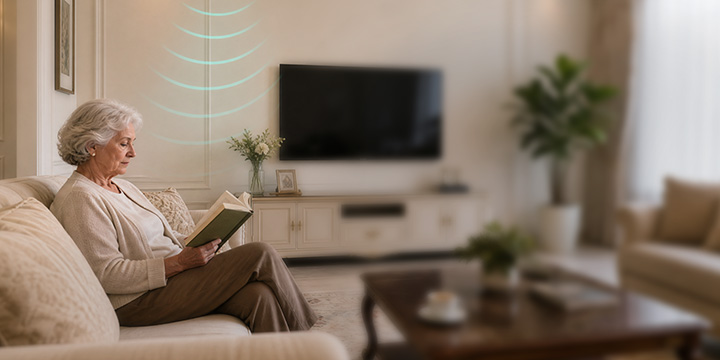
The MR01 takes a different approach. Using AI-powered millimetre-wave radar technology combined with AI algorithms, it detects human status and movement patterns without capturing images or video. This camera-free, wearable-free design helps protect personal dignity while still giving caregivers useful awareness of potential fall or bed-exit events.
Why the MR01 Matters
As populations age and care providers face increasing pressure to deliver responsive, dignified and cost-effective support, technologies like the MR01 are becoming increasingly important.
The need is clear: falls can happen suddenly, bed exits may indicate risk during the night, and caregivers cannot be everywhere at once. The MR01 helps bridge that gap by providing intelligent, contactless activity awareness across a wide room area.
Its key value lies in combining safety, privacy and efficiency. The Akuvox MR01* gives care providers a powerful tool for proactive monitoring without compromising resident comfort or dignity.
For care environments looking to improve response times, reduce deployment costs and support safer independent living, the MR01 represents a practical and forward-thinking addition to modern smart care infrastructure.
MR01 is not intended for the diagnosis, treatment, cure, mitigation, monitoring, or prevention of any disease... and does not replace professional medical care, direct observation by caregivers, emergency services, or life-safety systems. Given this is a care/safety product and your article leans on "faster intervention," you should mirror a short version of that disclaimer to manage liability and expectations. 95% detection accuracy (internal test data).
Find out more
- Akuvox Quarterly Updates
- The rise of 4G LTE Intercoms for Remote Access and Gate Automation
- The Integration Exchange Podcast Launch
- Holliday & Canal Wharf uses Akuvox Biometric Access Control
Featured Products:
|
 Let the CIE system design team help with your next access control project