What is MIFARE DUOX and why is it the next big step for access control?
Access credentials have moved from basic proximity cards that simply broadcast a number, to secure smart cards that can prove who they are, protect data and help keep buildings safer.
The latest step in that journey is MIFARE DUOX, a new generation of secure credential technology from NXP, designed for a world where access control is no longer just about opening doors.
So, what makes MIFARE DUOX different? And why might you choose it over MIFARE DESFire, MIFARE Classic or older Prox cards?
What is MIFARE DUOX?
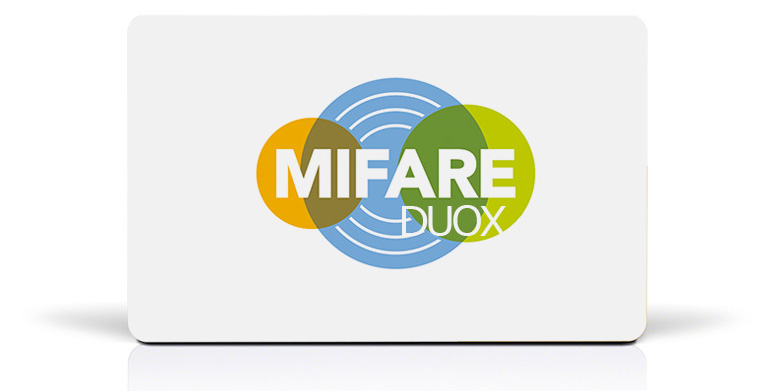
MIFARE DUOX is a high-security contactless smart card chip designed for access control and other secure NFC applications. It is part of the MIFARE family, which is widely used across building access, transport, education, hospitality, secure identity, EV charging and multi-application smart card systems..
The key difference is that MIFARE DUOX combines symmetric and asymmetric cryptography in a single chip. In plain English, that means it can support both traditional shared-key security and more modern certificate-based security approaches. This is important because it gives system designers more options for how credentials are issued, trusted and managed.
That may sound technical, but the customer benefit is simple:
MIFARE DUOX is designed to make secure access credentials easier to manage at scale, while preparing systems for the next generation of physical and digital identity.
Why is MIFARE DUOX needed?
Older access technologies were built for a simpler world.
Early Prox cards were convenient and cost-effective, but many worked by presenting a static ID number. That made them easy to use, but also vulnerable to copying. MIFARE Classic improved on early proximity technology, but it is now considered a legacy option for most new secure access control projects.
MIFARE DESFire then became the preferred high-security choice for many organisations. It introduced stronger encryption, mutual authentication and flexible multi-application support, making it suitable for a wide range of commercial, education, healthcare and public-sector environments.
But access control has continued to evolve.
Organisations now need to manage credentials across multiple sites, user groups, services and devices. A single credential may need to support door entry, parking, printing, cashless vending, lift control, visitor access, secure login or EV charging.
MIFARE DUOX has been developed to help solve that problem.
The big idea: easier security at scale
Traditional card systems often rely on symmetric cryptography. The card and the reader both need access to the same secret key so they can trust each other.
When this is implemented properly, it can provide strong protection. MIFARE DESFire is a proven example of this approach.However, as systems become larger and more distributed, managing shared keys can become more complex.
MIFARE DUOX adds this support through asymmetric cryptography.
Instead of relying only on shared secrets, asymmetric security uses a pair of keys: one public and one private. The public part can be shared more widely, while the private part remains protected. This helps create systems where credentials can prove they are genuine without every part of the estate needing to hold the same secret information.
For customers, that can mean:
- Easier credential issuing
- Simpler key distribution
- Better support for larger estates
- A stronger chain of trust
- More flexibility across cards, mobiles and wearables
In short, DUOX is about making strong security more manageable.

What makes MIFARE DUOX special?
MIFARE DUOX is not just “another access card”. It introduces several important improvements that make it especially relevant for organisations planning long-term access control upgrades.
It supports certificate-based authentication
One of the biggest developments is the move towards certificate-based trust.
Rather than depending only on shared keys, DUOX can support a model where a credential carries a digital certificate. That certificate helps prove the credential is authentic and trusted.
A useful comparison is a passport.
A traditional access card might say: “Here is my number.”
A more secure smart credential says: “Here is my identity, and here is proof that it is genuine.”
That extra proof is what makes certificate-based approaches so valuable in modern access control. It can help organisations build stronger trust into the credential itself, especially where access needs to be managed across larger or more complex environments.
It helps simplify key management
.jpg)
For many customers, the biggest access control challenge is not the card itself. It is the process behind it.
- How are credentials issued?
- How are keys protected?
- How do you manage access across multiple sites?
- How do you avoid disruption when upgrading?
- How do you keep the system secure for years?
DUOX has been created with those questions in mind.
By supporting asymmetric cryptography, it can reduce the pressure on traditional shared-key distribution. That is particularly useful for large organisations, multi-site estates, higher education, healthcare, enterprise offices, public buildings and mixed-use developments.
It is designed for modern access ecosystems
Access control is no longer limited to plastic cards.
Today, people may use:
- Physical smart cards
- Smartphones
- Wearables
- Visitor passes
- Staff ID badges
- Multi-application credentials
- Secure login tokens
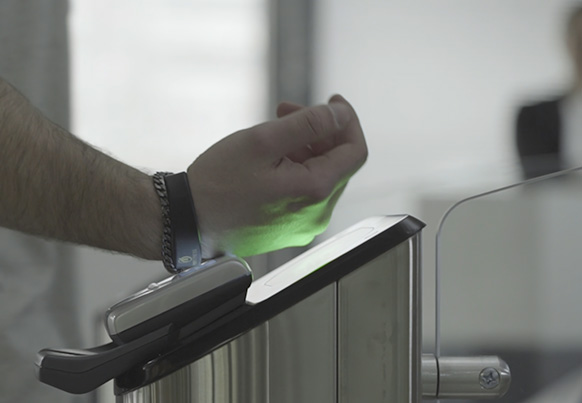
MIFARE DUOX is designed to support a wider access ecosystem, including interaction with mobile devices, wearables and DUOX-powered smartcards.
This matters because many organisations do not want to choose between card access and mobile access. They want both. They want a system that can support today’s users and tomorrow’s expectations.
However, it is important to be clear: the benefits of DUOX depend on the wider access control platform around it.
To unlock the full value of DUOX, customers will need compatible readers, credential management software, provisioning processes and system configuration. The card technology is only one part of the solution.
That is why early planning is important. DUOX should be seen not simply as a new card choice, but as part of a wider credential strategy.It is built with future security in mind
Security threats do not stand still.
Organisations are now thinking not only about current risks, but also about how their systems will stand up over the next 5, 10 or 15 years. Access credentials often remain in place for a long time, so choosing the right technology matters.
MIFARE DUOX is Common Criteria EAL6+ certified and includes enhanced security features such as Transaction Signature and Proximity Check. NXP also states that DUOX uses AES-256 as an initial step towards post-quantum cryptography, helping organisations prepare for future security challenges.
For customers, the practical message is clear:DUOX is not just designed for today’s doors. It is designed to support a longer-term approach to secure identity.
It is also worth noting that MIFARE DUOX offers a practical bridge for organisations that are not ready to upgrade everything at once. While DUOX is the higher-security credential standard, it can still be used in a DESFire-style environment where the latest reader technology is not yet in place.
This gives customers a more flexible migration path: they can begin issuing DUOX credentials now, continue using existing DESFire-compatible infrastructure where required, and unlock the full DUOX feature set when their readers and software are ready.
What this means for access control
MIFARE DUOX is important because it reflects where access control is heading.
Not just cards.
Not just doors.
Not just convenience.
Modern access control is becoming part of a wider identity ecosystem, where credentials need to be secure, flexible, scalable and ready for both physical and digital use.
MIFARE DESFire helped move the industry away from simple, copyable credentials and towards encrypted smart access. MIFARE DUOX takes that journey further, adding certificate-based possibilities, simplified key management and future-facing security features.
For customers, that means more choice.
For installers and specifiers, it means a stronger conversation around future-proofing.
And for organisations planning their next access control investment, it means one simple question is worth asking early:
Are we choosing a card for today, or a credential strategy for the future?
Find out more
- What Is MIFARE DESFire and Why Does It Matter?
- The Evolution of Card Credentials: From Prox cards to secure smart cards
- What Is Matter? The smart home standard making connected devices simpler
- The Integration Exchange Podcast Launch
- Aliro 1.0 Arrives: New standard for digital keys and smart security
|
 Let the CIE system design team help with your next access control project