What Is MIFARE DESFire and Why Does It Matter?
Contactless technology now sits quietly behind countless everyday journeys and access points, from office entry systems to public transport. While early smart cards prioritised convenience over security, today’s systems demand robust protection against cloning, hacking and data breaches. This is the exact environment where NXP’s MIFARE DESFire thrives.

The Architecture of High Security
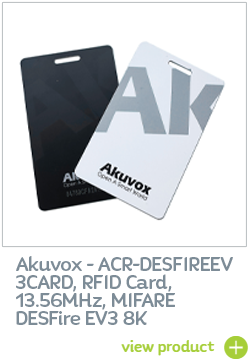
At its core, MIFARE DESFire is a microcomputer packed into a plastic credential or mobile device chip. Unlike basic RFID tokens that simply transmit a fixed card number, DESFire securely checks and confirms information with the reader before allowing access.
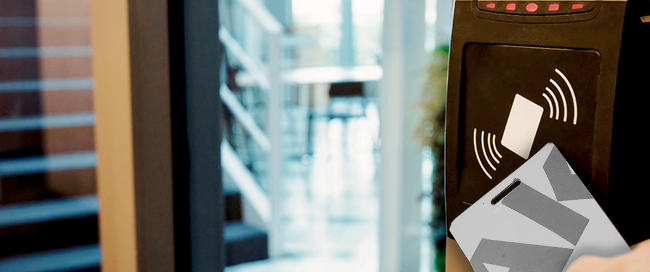
When a DESFire card approaches a reader, they execute a mutual three-pass authentication. This digital handshake ensures that the card only reveals its data to a genuinely authorised reader, dramatically reducing the risk of "skimming" or over-the-air card cloning.
One Card, Unlimited Possibilities
In the past, people often had to juggle a different card or pass for every part of their day: one for office parking, one for building access, and another for public transport. MIFARE DESFire removes that complexity through a flexible, sophisticated file structure that can support multiple applications on a single credential.
A single DESFire card acts like a secure digital wallet containing individual, encrypted compartments. These separate directories allow organisations to issue one credential that can support several everyday uses at once, including:
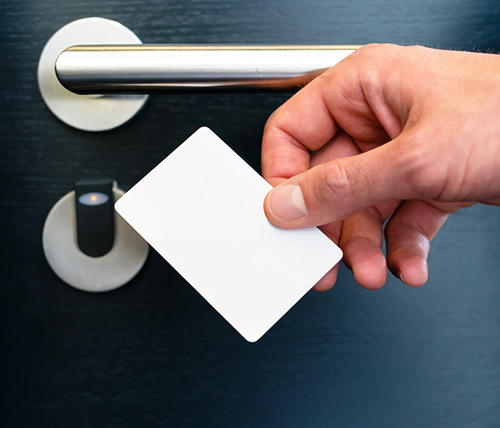
- Physical access control: entry to secure areas, corporate offices or government buildings.
- Public transport ticketing: storing fare balances, season tickets or multi-journey passes across local transport networks.
- Closed-loop payments: paying for vending machines, meals or printing on university and corporate campuses.
The Evolution: EV1 to EV3
NXP has continuously updated the platform to stay steps ahead of global cybersecurity threats:
- DESFire EV1: Established the foundation of secure mutual authentication and flexible file management.
- DESFire EV2: Introduced the ability to dynamically add new applications to the card after it was issued to the user. It also boosted read range and operational speed.
- DESFire EV3: The modern gold standard. EV3 brings optimised transaction speeds, extended read ranges, and advanced "SUN" (Secure Unique NFC) message features. Crucially, EV3 bridges the gap to the future by integrating flawlessly with NFC-enabled smartphones, enabling users to ditch plastic entirely for secure mobile wallets.
As organisations migrate toward smart buildings and integrated ecosystems, security cannot be an afterthought. Opting for MIFARE DESFire means investing in a technology that balances data protection with seamless user convenience. It ensures that your data remains private, your physical spaces stay protected, and your infrastructure is ready for the mobile-first demands of tomorrow.
Whether for property developers, facility managers, or everyday users, MIFARE DESFire delivers an impressive blend of innovation, usability, and design, transforming the way we think about access control. To understand how technologies like DESFire fit into the wider security journey, read more about the evolution of card credentials.
Read more:
-
How IP Intercoms are revolutionising Gate Automation
-
5 Ways Access Control Improves Safety in Schools
-
What is access control?
-
How to design an Access Control system
-
What is a Contactless Pathway?
|
 Discover more with CIE Group
Featured Products