Cloud Access Control | Hype or Real Transformation
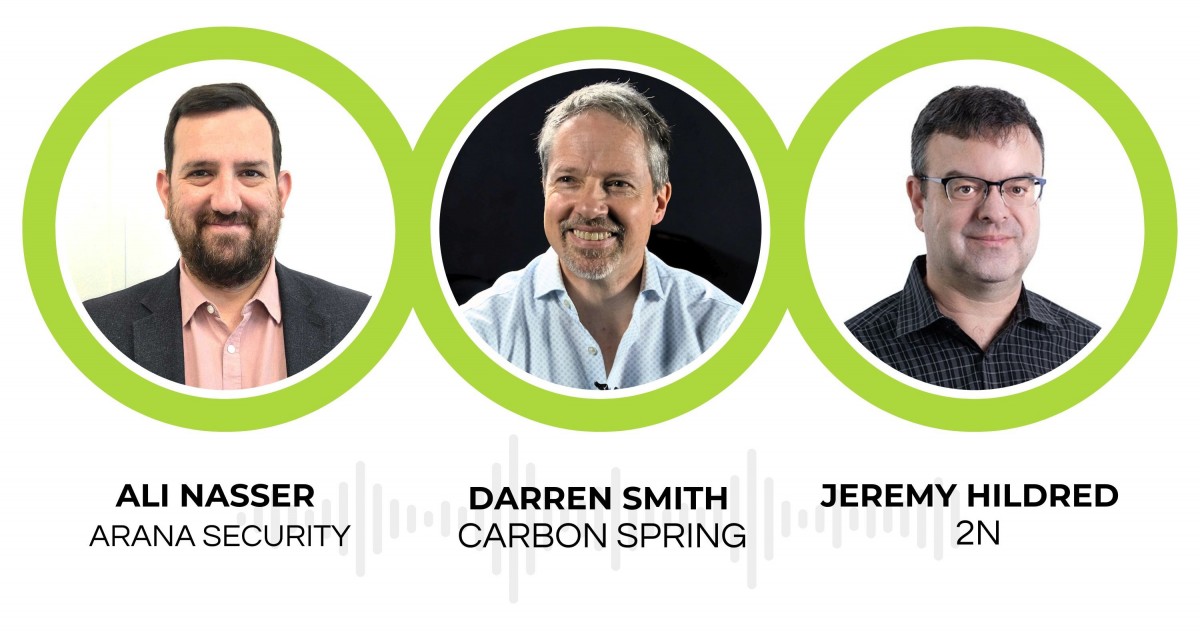
When CIE Group launched The Integration Exchange, the aim was simple: create a space for honest, useful conversations about the technologies shaping security, AV, audio and connected buildings.
In the first episode, Cloud & Access Control: Hype or Real Transformation? That was put straight to the test.
In the first episode, CIE-Group’s Kevin Sherwood gets straight into one of the biggest questions in access control: is cloud just industry hype, or is it changing buildings for the better?
Cloud is not just a technology shift. It is a business shift.
For many people, cloud access control sounds like a technical upgrade. Something newer, sleeker and more connected than traditional on-site systems.
But the conversation quickly moved beyond the technology itself and into something much more practical: how buildings are actually run.
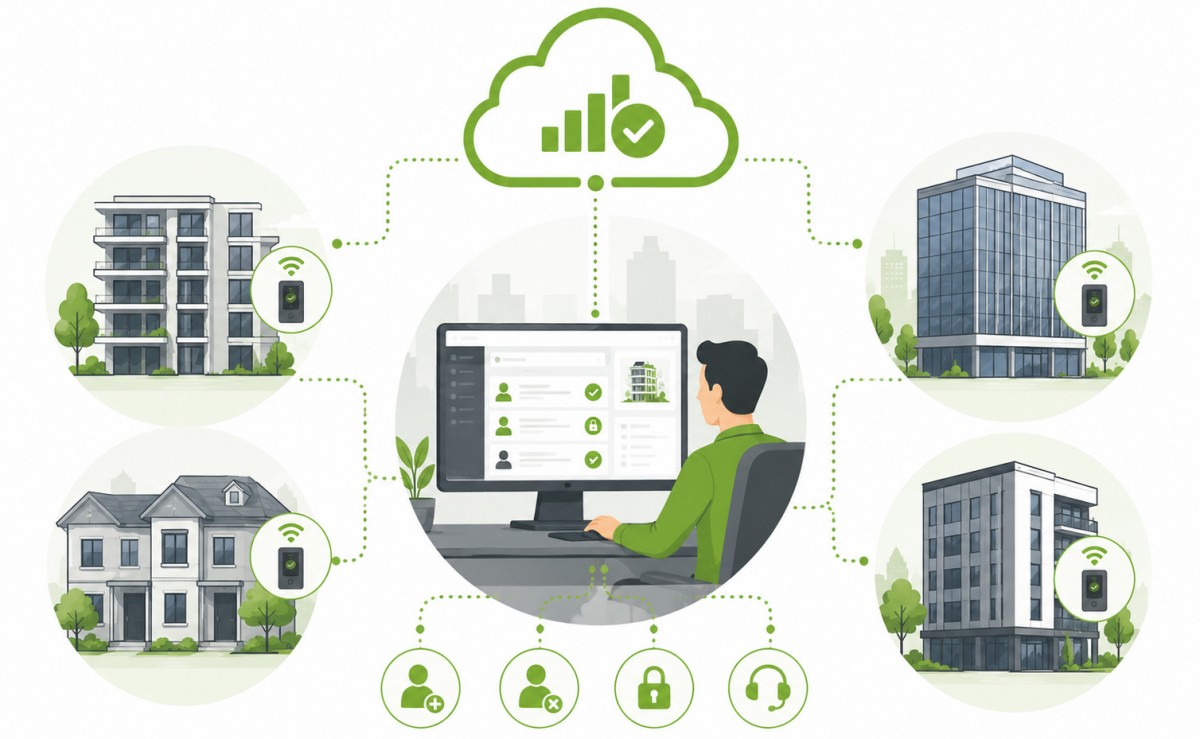
One of the strongest themes from the episode was the value of remote management. For property managers, student accommodation providers, build-to-rent operators and commercial landlords, the ability to manage access from a central location can make a real difference.
Instead of needing staff physically present in every building, cloud-based systems can allow teams to issue access, remove permissions, respond to problems and support residents or tenants remotely.
That matters because people are often one of the biggest operating costs in a building.
Sustainability starts with fewer wasted journeys
Sustainability is a word used often in building technology, but the podcast made an important point: it has to mean something practical.
One clear example was maintenance.
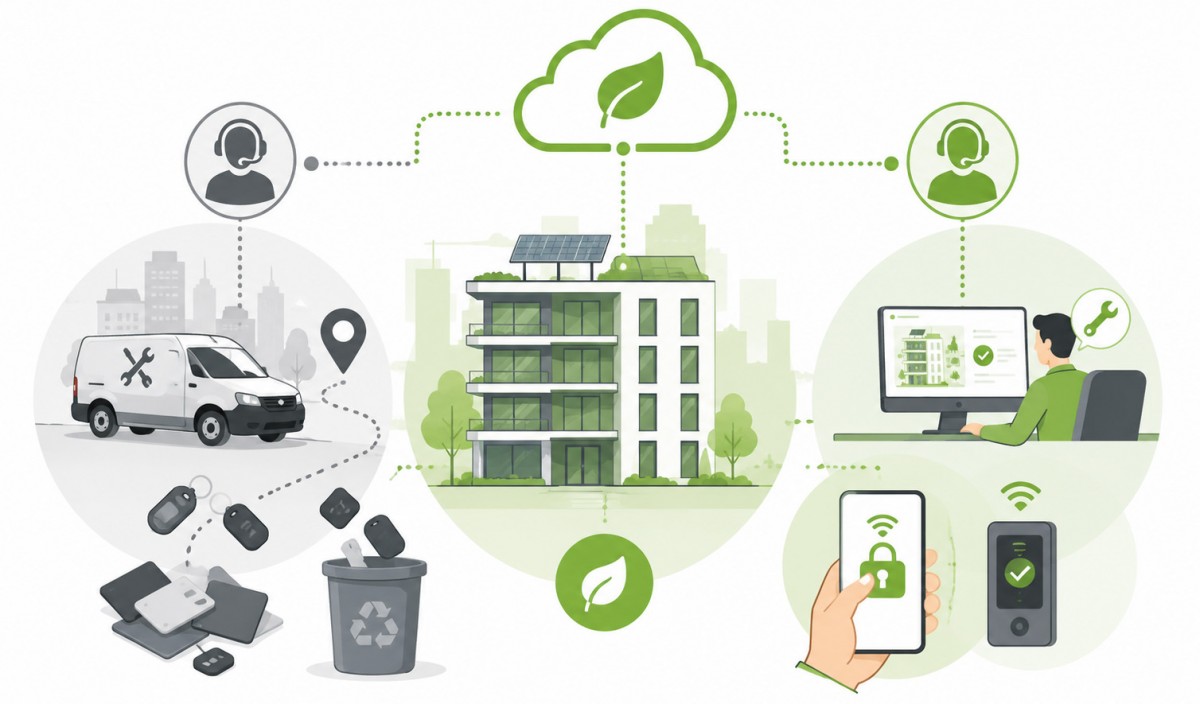
With connected systems, a support team can often diagnose an issue before sending someone to site. Sometimes the problem can be fixed remotely. Or when a visit is needed, the engineer can arrive knowing what they are dealing with, with the right replacement parts and have a much better chance of fixing the issue first time.
That means fewer wasted journeys, less disruption for the customer and a more efficient use of time.
The same thinking applies to everyday access credentials. Traditional cards and fobs can be lost, replaced and reissued again and again. In a large residential development, even a small percentage of lost credentials each month can create a steady stream of plastic waste, admin and staff time. Digital credentials and remote provisioning can reduce that burden.
In other words, sustainability is not always about grand gestures. Sometimes it is about making the day-to-day running of a building smarter.
The cheapest option is not always the best value
Another standout theme from the episode was the difference between upfront cost and long-term value.
In construction and development, decisions are often driven by the need to deliver a building as cost-effectively as possible. That is understandable. But the podcast highlighted a common challenge: the person choosing the system may not always be the person who has to live with, manage or maintain it afterwards.
A cheaper system may look attractive at the specification stage, but if it limits how the building can operate, creates more admin or needs replacing sooner than expected, the long-term cost can be much higher.
The right system can support better service, smoother operations and a more attractive building. A slightly higher investment at the start may help avoid costly changes later.
Integration is where cloud becomes really powerful
Perhaps the biggest message from the first episode is that cloud becomes most valuable when it helps systems work together.
Access control does not exist in isolation. It connects to people, places, lifts, reception desks, security teams, mobile phones and building management processes.
The podcast explored how cloud-based systems can make those links easier because more devices and platforms are now using standard network-based communication. That opens the door to integrations that can make a building feel much more seamless.
That is the real promise of integrated technology: not technology for its own sake, but systems sharing useful data to create better outcomes.
So, is cloud access control hype or real transformation?
The first episode of The Integration Exchange suggests the answer depends on how cloud is used.
Cloud is not a magic wand. It does not automatically make every building smarter, greener or more efficient. But when there is a clear problem to solve, it can be a powerful tool.
- It can help property teams manage buildings remotely.
- It can reduce wasted journeys and repetitive admin.
- It can support more sustainable ways of working.
- It can improve the resident, visitor and staff experience.
- It can unlock integrations that make buildings work more intelligently.
Most importantly, it can shift the conversation from “what does this product do?” to “how should this building operate?”
That is where the real transformation begins.
Watch The Integration Exchange
The first episode of The Integration Exchange is now available to watch on YouTube.
Whether you are an installer, consultant, property manager, developer, manufacturer or simply interested in the future of connected buildings, the podcast offers practical insight without the jargon.


Because connected systems deserve connected conversations.
Find out more
- Akuvox Quarterly Updates
- What is AKClaw? A New Kind of AI-Driven Smart Intercom Panel
- The Integration Exchange Podcast Launch
- Aliro 1.0 Arrives: New standard for digital keys and smart security
|
 Let the CIE system design team help with your next access control project