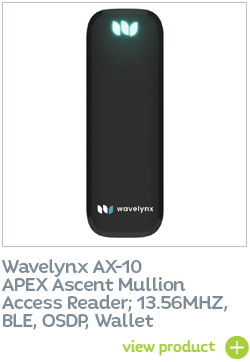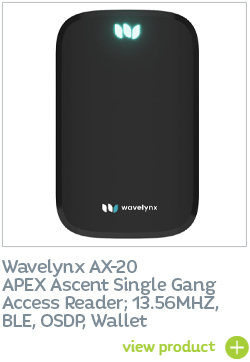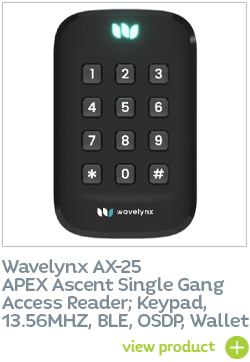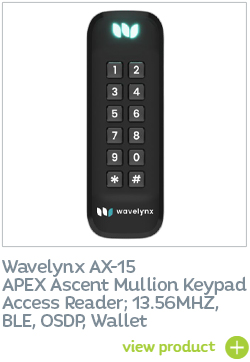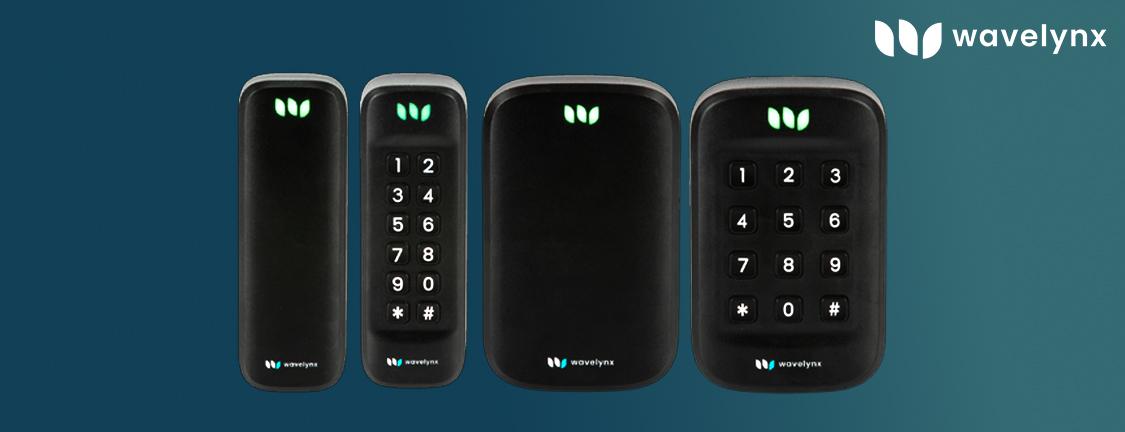
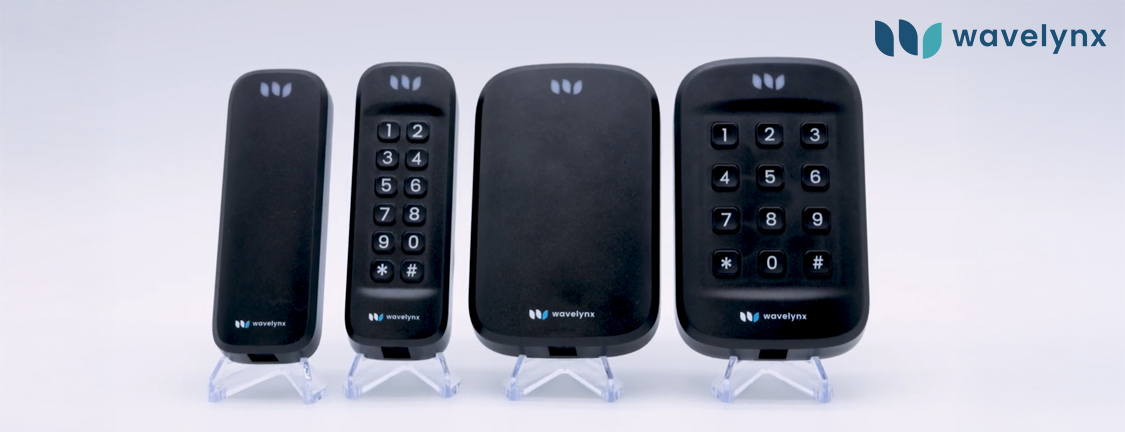
Wavelynx - the mobile-first access control pioneer unlocking secure, flexible entry for modern buildings. Supporting straightforward authentication, system compatibility, and security suited to all evolving environments.

Future-Ready Mobile & Multi-Credential Access Control
Wavelynx is a leading innovator in secure mobile credential and access control reader technology, delivering modern, flexible authentication solutions for today’s connected buildings. Designed for organisations seeking to move beyond traditional cards and fobs, Wavelynx enables secure, frictionless access using smartphones, wearables, and smart credentials.
With a strong focus on security, interoperability, and future-ready design, Wavelynx solutions are trusted globally across commercial, enterprise, education, healthcare, and critical infrastructure environments.
What Sets Wavelynx Apart
What makes a modern access control system truly future-ready? Wavelynx answers these challenges with a mobile-first, secure, and open approach to access control:
- Purpose-Built Mobile Credential Technology - Designed specifically for mobile access, Wavelynx readers securely support BLE and NFC communication with smartphones and smart devices.
- Enterprise-Grade Security by Design - Secure Element hardware, encrypted communication, and advanced credential protection help safeguard against cloning and unauthorised access.
- Seamless Open Integration - Compatible with leading access control platforms, Wavelynx enables easy integration into new or existing systems without vendor lock-in.
- Future-Proof, Investment-Safe Architecture - Scalable hardware and firmware ensure long-term system flexibility as authentication technologies and security requirements evolve.
|
|

Mobile-First Access Control, Built for Modern Environments
Wavelynx specialises in BLE (Bluetooth Low Energy) and NFC-enabled access control readers, allowing users to unlock doors securely using mobile credentials stored on smartphones and smart devices. This mobile-first approach reduces the cost, administration, and security risks associated with physical credentials.
Whether deployed in new installations or as part of a system upgrade, Wavelynx readers deliver a future-proof access control platform that adapts to evolving security and workplace requirements.
Flexible Deployment & Seamless Integration
Designed with integrators and system designers in mind, Wavelynx readers support a wide range of access control platforms and credential technologies, enabling straightforward installation and migration from legacy systems.
Key benefits include:
- Smooth transition from cards to mobile credentials
- Support for hybrid environments (mobile + card)
- Simplified credential issuance and management
- Scalable architecture for multi-site deployments
Ideal Applications & Markets
Wavelynx access control solutions are ideally suited for:
- Corporate offices & enterprise buildings
- Education campuses & student accommodation
- Healthcare facilities & laboratories
- Commercial real estate & mixed-use developments
- Data centres & critical infrastructure
- Hospitality, leisure & smart buildings
Why Choose Wavelynx from CIE Group?
By partnering with CIE Group, customers gain access to expert technical support, trusted integration advice, and industry-leading access control solutions from Wavelynx. Together, we deliver secure, scalable, and future-ready access systems that meet the demands of modern buildings and digital-first users.
|
 Let the CIE team help with your next security system project
Featured Products: