What is USB version 3.1?
USB 2.0 was upgraded when USB version 3.0 came along in 2008. This version has 9 pins and boasts ‘superspeed’ data transfer, so we get the power delivery we need for our devices and the ability to transfer data at a much improved 5GB per second – up from the speed of USB 2 which could only handle 480Mb per second.
This said, many users didn’t even notice the change, as the sockets and connectors look exactly the same and USB 3.0 is backwards compatible with version 2.
But recently there’s been another upgrade with the introduction of USB version 3.1. This latest version offers power delivery and data transfer just like before, but now with a significant boost in bandwidth, we can all enjoy what’s being called superspeed Plus.
Data-wise this latest upgrade now offers an amazing 10Gb per second data transfer giving it the capability to fully support HD video and becoming a new and really relevant connectivity option for the AV industry.
What is the Power Delivery and Data Transfer of USB 3.1?
The common USB version 2.0 has 4 ‘conductors’ (or ‘wires’); a pair for power and a pair for data; this allows us to charge our mobile phones and synchronise data simultaneously with consoles or exchange data from point to point.
Prior to version 3.1, USB has only been capable of supporting 4.5 Watts of power delivery. Now this latest version offers power transfer upgraded to cope with ‘Quick Charge’ a new type of power management technology delivering 5, 9, 12 and 20 volts with a whopping 100 watts, meaning more and more handheld and portable devices can be powered using this delivery method.
Apple seems to think that this is significant as their newest release; Macbook has only two ports. A headphone jack and the new Type C USB version 3.1 port to support power, HD video and data transfer.
What is Type C version 3.1?
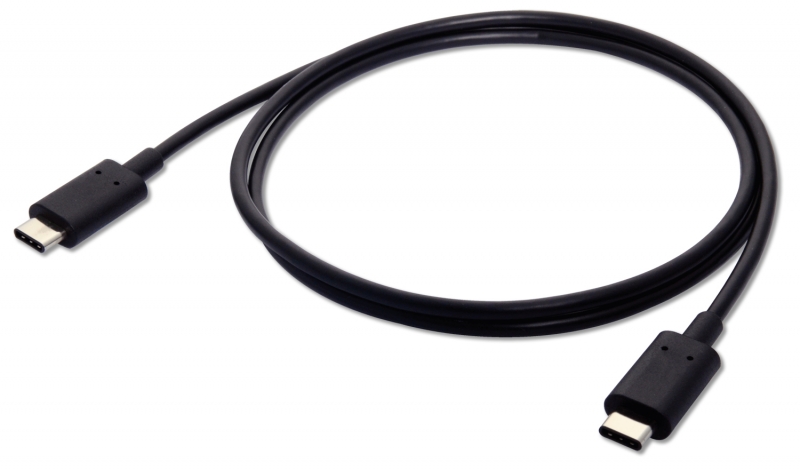
The new USB Type C connector is not to be confused with USB version 3.1 as the two are not necessarily mutually exclusive. To clarify; USB version 3.1 is the new standard (the specification of mechanical, electrical and protocol capabilities); USB TYPE C is the connector – a new universal USB connector which has also just been released.
With its increased capacity to handle HD video and provide varying power delivery requirements, the new USB version 3.1 will quickly become much more prevalent in our everyday lives, but more importantly in our AV topology.