Cloud vs. On-Premises Access Control: Choosing the Right Solution
What’s the real difference between cloud-based access control and traditional on-premises systems – and why make the switch?
VOLO is designed as a cloud-first platform, but founder Dean Kernot offers a refreshingly honest perspective:
“Cloud doesn’t suit every environment. I’m not here to say everything should be cloud. It’s about choosing the right solution for your specific setup.”
Let’s dive into the key differences, benefits, and the right questions to ask when choosing your access control strategy.
What’s the difference between on-prem and cloud-based access control?
On-premises access control systems typically require:
- A dedicated PC/server
- Installed software
- Ongoing manual updates
- Internal network configuration
Cloud-based systems like VOLO offer:
- Zero on-site software or servers
- Browser-based access from anywhere
- Automatic updates
- Secure hosting via platforms like AWS
What does 'Cloud-Based' and 'On-Prem' Access Control actually mean?
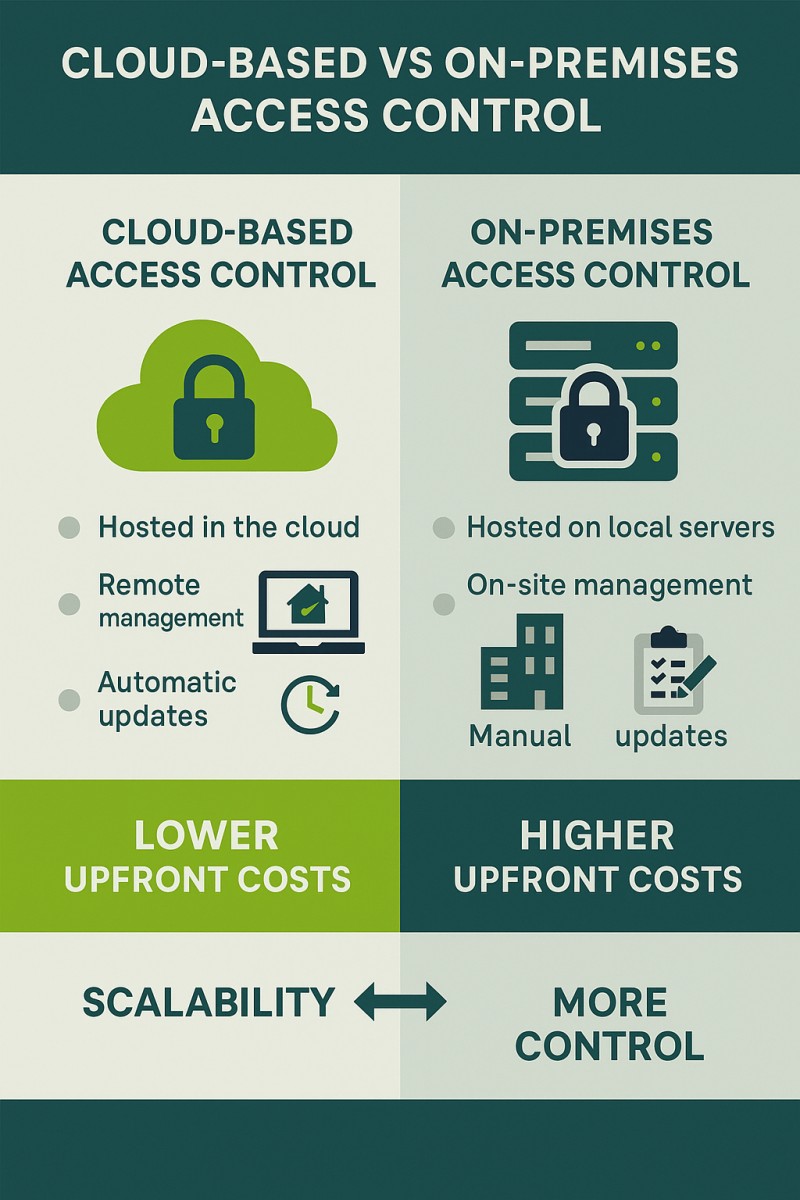
When we talk about access control, we’re referring to the systems that determine who can enter a building or room, when they can enter, and under what conditions. These systems include card readers, electronic locks, door controllers, and the software that manages it all.
The key distinction lies in where the management software is hosted – and how it is accessed.
On-Premises Access Control
With on-premises access control, all the software and data are hosted locally – typically on a server or dedicated PC within your facility. The system is installed and managed by your internal team or a local integrator. You’ll usually require:
- A physical server on-site
- Manual software updates and backups
- Access via a local network (LAN)
While this setup offers full control and can be ideal for isolated buildings, it also requires ongoing maintenance, in-house IT involvement and can be vulnerable to localised outages or security issues.
Cloud-Based Access Control
Cloud-based access control systems, like VOLO, host the software and data in the cloud – using secure servers from providers such as Amazon Web Services (AWS). The hardware devices on-site (such as readers and controllers) connect directly to this cloud platform over the internet or GSM.
This allows:
- Remote management from any device with a browser
- Automatic updates and security patches
- Centralised control over multiple sites
It eliminates the need for on-site servers or complex IT setups, making it ideal for modern, scalable and distributed operations.
Why more Organisations are moving to the Cloud
“The minute you want centralised control of multiple remote locations, Cloud’s got to be the way forward.” – Dean Kernot, Founder of VOLO
-
No Dedicated Hardware or Software
“With VOLO, you don’t need that dusty PC in the back office anymore,” Dean explains. “Just plug in a controller, and it connects to the cloud in minutes.”
No need to maintain outdated software or IT infrastructure. VOLO simplifies everything – just install the controller and go.
-
Stronger Cybersecurity
“We’ve had clients admit they weren’t sure how secure their on-prem setup was. When they move to VOLO, they get AWS-level protection and full penetration testing.”
With cloud, your access control system benefits from enterprise-grade cyber defenses, maintained by industry experts – not overburdened in-house teams.
-
No IT Headaches
“You don’t have to chase the IT department to get ports opened or firewalls configured. You’re live and online in 10 minutes.”
VOLO supports dual connectivity (Ethernet + GSM), so you can avoid internal networks altogether – boosting both speed and security.
-
Flexibility, Scalability and ‘Future-Ready’
“You might hate the term ‘futureproof’ (I do!), but it’s true; Cloud gives you options for whatever comes next.”
Whether you’re expanding, integrating new systems, or just staying agile, cloud access control gives you the freedom to adapt.
-
Instant Software Updates – Free of Charge
“When we roll out a new feature, like fire alarm integration, it’s live the next day. No installs. No downloads. No downtime.”
You’ll never run outdated software again – and you’ll never pay extra for updates.
But when is On-Prem still the right fit?
Despite its benefits, cloud isn’t always the answer – especially for:
- Single-site buildings
- Minimal access control requirements
- Facilities with robust internal IT infrastructure
“If you’ve got one building, a solid network, and no plans to scale or centralise, on-prem can still be the right fit.”
The questions you should be asking:
Choosing the right access control platform starts with asking the right questions:
- Do you need centralised control across multiple locations?
- Are some sites lacking reliable network access?
- Do you want to avoid relying on internal IT teams?
- Is cybersecurity a concern you’d rather leave to the experts?
- Do you need remote management, real-time alerts and fast rollout?
The Bottom Line
“Cloud isn’t just about what you need today,” Dean concludes. “It’s about being ready for whatever’s around the corner.”
If you’re managing multiple locations, want to cut down on hardware and IT dependencies, or need real-time access from anywhere – cloud is the way forward. But for single buildings with strong local infrastructure, on-prem may stil be the bext option.
Frequently Asked Questions about Cloud-based Access Control
Can I still use my existing readers or keycards with a cloud-based system like VOLO?
Yes. VOLO is designed with a reader-agnostic architecture, which means it supports a wide range of reader technologies and formats – from legacy RFID and MIFARE readers to modern QR code, Bluetooth, biometric and ANPR systems.
As long as your existing readers use a compatible data output format (like Wiegand or Clock & Data), VOLO can integrate them into the cloud platform – saving you the cost and complexity of replacing your entire hardware infrastructure.
What happens if internet connectivity fails at a site using cloud access control?
VOLO is built with dual-pathway connectivity (Ethernet and GSM), ensuring continuous operation even during network outages. If the primary Ethernet connection fails, the system automatically switches to GSM and notifies users of the change. All event logs are recorded and normal operations continue seamlessly.
This redundancy ensures zero downtime and reliable performance even in remote or network-challenged environments.
Is cloud-based access control GDPR compliant?
Yes. VOLO’s cloud access control system is hosted on Amazon Web Services (AWS), which is fully GDPR-compliant. Data is encrypted in transit and at rest, and access is governed by strict authentication protocols.
By offloading data management to cloud experts, organisations often improve their overall data protection position compared to maintaining sensitive data on potentially outdated or unpatched on-premise systems.