


Circadian rhythm / Body clock
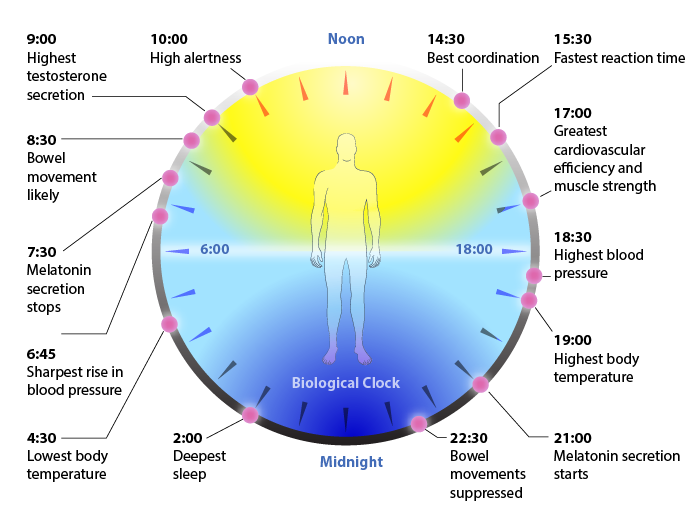
As humans we’ve only been inside for a short time of our evolution – we’re used to being outside from when you get up till the time the sun sets. In the evening the colour temperature of the light is constantly changing and that resets our body clock which is called our circadian rhythm/our natural body rhythm. All of a sudden we’re trapped in buildings with lots of artificial lights. For example being in a training room all day with a single colour temperature of lights leaves us feeling sleepy which is to do with our circadian rhythm/body clock being reset. This lighting used is very artificial and not good for us. So new technologies are coming together to create an overall thing called bio adaptive (sometimes called human centred) lighting.
Bio-Adaptive Lighting: How it works
Bio adaptive lighting this is where the colour temperature of light fittings in a space can be varied throughout the day to try and match the sun. However this has a lot of challenges inbuilt with it, firstly we’ve got to vary the colour temperature – the way that’s going to happen is light fittings. They are going to need an RGB lighting array so mixing red, green and blue you’re also going to create whatever colour of whites you want but that’s also got to be done with a really good colour rendering index and on an LED box you’ll see a number for CRI, anything above 90 is really good and colour rendering index is the ability of the lights to render a colour accurately. If the CRI is a bad colour that looks really bright and vibrant outside you take it indoors and it’s sort of dull and lifeless, we’ve also got to do that at lots of different luminances. So you’ve got; the dimmer knob, good colour rendering index and a change in temperature throughout the day and this is really challenging one of the practical ways this is going to happen.
Power over Ethernet lighting is going to be a big deal initially driven by the commercial space there have been quite a few studies done on by adaptive lighting. Lots done in Scandinavia and what they found is if you put adaptive lighting in schools the performance of kids goes up, if you put it in hospitals people get better quicker, in homes – people feel fresher they feel more alive they can be lively when they want to they can besleepy at night. So power over Ethernet is going to be one of the technology drivers to make this happen.
It’s not a serious professional product yet, but will be soon and we are going to have the beginnings of some serious professional products to enable us to do bio adaptive lighting.
