


What is happening in the growth of Network Audio?
What’s the latest in Network Audio?
As technology evolves so does the opportunity for integrating audio into network systems.
Our partners Axis are well known for their cameras and surveillance systems. As audio and CCTV naturally fit together, it made sense for audio solutions to be added to the Axis range. The addition of audio to surveillance allows users to both hear and speak to the people captured on camera, therefore improving the security solutions effectiveness.
What benefits are there from adding audio to CCTV?
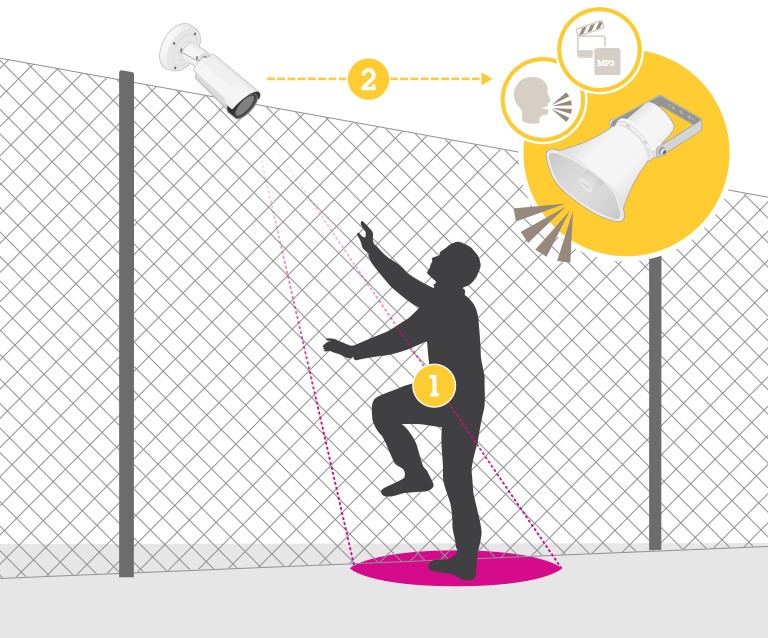
Adding audio to video helps to improve the prevention of crime as well as preventing the need to call security or the police. For example – a speaker connected to an alarm system can be set up to automatically trigger and play an audio message or allow an operator to remotely address an intruder. Once a message is triggered, an operator can review the scene and communicate via live messaging e.g. warning an intruder to leave the area. A spoken message is more effective at deterring criminals than a traditional siren noise.
What benefits has network audio had on Public Address and Zone Management?
Audio zone management has become a problem to a lot of public institutions such as schools and universities. In the past using legacy technology has proved quite difficult – this is down to the number of connections and technical components needed to create separate zones on a big scale. This requires a dedicated technical room with complicated design and set up, which is very expensive with an analogue system.
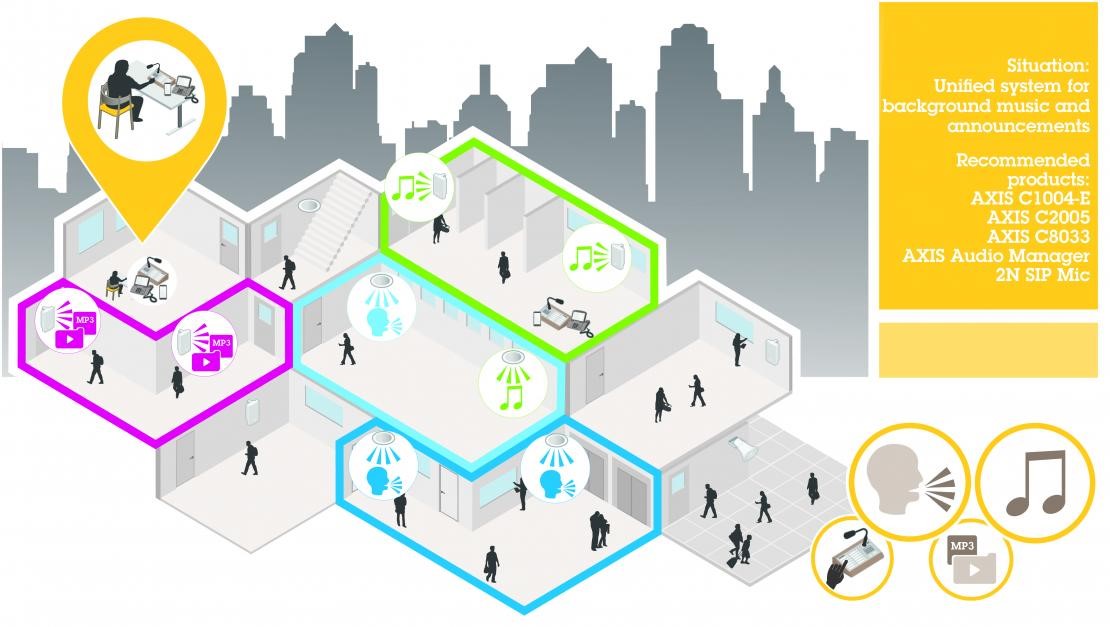
With the latest network audio advancements however, this means each speaker now has it’s own IP address which can be individually addressed on the network. Using PoE technology you only need ONE standard network cable to both connect and power the speakers to an existing standard network infrastructure. This allows one speaker to be selected in isolation or to add/remove from multiple groups as needed using one central dashboard using a simple drag and drop interface. This means you can play and schedule audio e.g. music, bells and live announcements to specific speakers. This comes in handy when announcements are only relevant for example in a school to certain pupils in a classroom.
Not only does network audio help to create more targeted broadcasts, it also streamlines the maintenance and management of the audio systems. All the audio devices can be managed on the network centrally; this means you can run health checks to identify any issues as well as running everyday tasks like volume control.
One of the key benefits network audio adds especially to education sectors where budgets can be stretched – it offers flexibility in the solutions. So it can be scaled and adjusted to meet the changing needs of the end client.
Can network wireless speakers sound as good as analogue wired?
A popular area of interest in network audio, especially within retail and hospitality is the quality of sound produced by network speakers. Sound quality is important in retail and hospitality as customer experience is top priority.
Sending audio signals digitally to speakers over a network is a new way of delivering high quality audio; this is particularly great for when you need to send sound over long distances. For example in retail – stores can be all over the country, however they must all play the same music. Using network audio the head office can centrally control all background music knowing the sound quality is not compromised over all their stores.
How do network speakers work?
Each individual speaker has a digital signal processor this tunes the signal by using an advanced equalisation, filtering and compression. This ensures the highest quality in sound. As network speakers do not need the traditional cables, audio data can therefore be far away and not lose any sound quality in its delivery to the speaker.

